Sunday, March 6, 2016

Journey to Ibarra

IBARRA
Known as la ciudad blanca (the white city), Ibarra's downtown streets are lined with finely detailed, whitewashed colonial architecture.
Dad is so happy because he never has to drive here in Ecuador.  We were with the Ministry of Education and supplied a driver for us.  We went to Ibarra to look at the pediatric area of a hospital.  We hope to be able to donate some school desks and furniture so they children that are staying in the hospital can keep current with their school work.  The Ministry of Education will supply the teachers in each hospital.  We hope to be able to help at leat 16 hospitals all over Ecuador with the donation.  We are awaiting approval from our Area Presidency in Peru.

The hospital we visited.

The room that will be turned into a classroom in the pediatric wing of the hospital.

The toys for the children to play with.  Not very many!!

Meeting with the head doctor from the pediatric department along with representatives from the Min. of Ed.

We also met with the hospital director.

Here we are in the pediatric wing of the hospital.  I thought the drawings were cute of Adam and Eve!

Outside of the hospital there were 4 pharmacies in a row.

Another shot of the street outside of the hospital.

We stopped and had lunch in Otovalo where there are a huge population of indigenous people.  This pic was taken from our table while we were eating lunch.  The woman is in her native dress.  The men wear their hair in a long pigtail and usually wear white pants and a blue poncho.  When Otovalian young men go on missions they are allowed to keep their long braid!

In the restaurant.

A Catholic church in the center of Otovalo.  Ibarra and Otovalo are only about 1/2 hour apart.

Inside the church.

One of the murals inside the church.

Seeking Projects in Archidona


ARCHIDONA
Archidona is a colonial town, founded in 1560, north of Tena, Ecuador in the Napo Province. Archidona still serves as one of the region's main missionary outposts. It's also a business and social center for the small Kichwa communities in the vicinity.

Street view Archidona

Hospital Stadler Richter in Achidona that requested some maternity equipment.  There isn't a obstetrician in the city so the expectant mothers have to go to the nearby city to deliver their babies.  Many still have them at home.

 A meeting with the hospital director.  The two men on the right are Dr. Zambrano who is a member of our ward and works for Charity Anywhere and the man on the right is the exmayor of the city.
The baby beds in the maternity ward.

Their basic obstetric equipment.

The delivery room.

The laundry area of the hospital.

This area of the laundry is covered and the clothes can be protected from the rain.


Watching some butterflies on the flowers.  They were all over!

We also went to visit a birthing center.  This little baby had been born there 6 months ago.  Many of the native people wrap their babies in a blanket or piece of material to carry them.  Many of the women carry them on their backs.

Here is a painting of how the native women give birth holding on to a rope!!

Here is their medicine cabinet full of herbs and roots to use during the delivery!

Here is the rope where they give birth.  There is a big mattress on the floor under the rope!

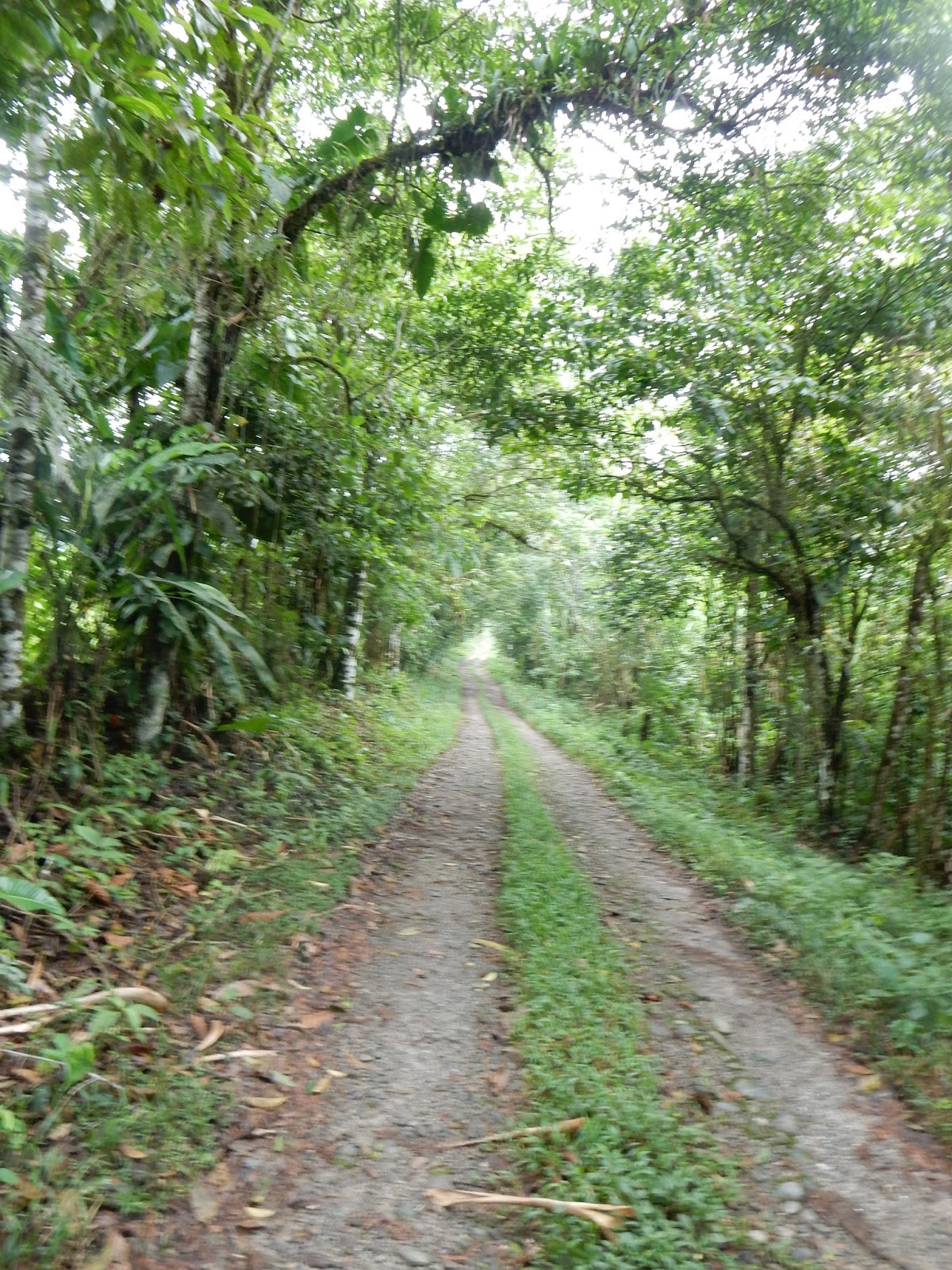
Some pictures of the jungle.


A house in the jungle.

The corner store.

A house in the jungle taken from the car in the rain.

Another typical home along the roadside.

More greenery on our way home.


It rained most of the time we were there.  You can see the fog on the hillside and the cows.  This picture was taken closer to Quito so it wasn't so overgrown with vegetation.  Farmers farm steep hillsides in the Andes.

Trip to Tena


Tena, the capital of the Napo Province, is a city in the Amazon rainforest. Known as the “cinnamon capital" of Ecuador, and originally founded by missionary explorers, Tena has emerged as a major commercial center of Ecuador. It is home to a regional hospital and many tourist related businesses, including a small airport and a vital bus terminal.
Tena is a popular launching point for jungle, kayaking and rafting tours in Ecuador's Amazon rainforest region. The entry to the city is marked by a statue of the indigenous hero Jumandy, who led an uprising against the Spanish colonizers in 1578 and was subsequently executed.
At the confluence of the Tena and Pano rivers in the center of town lies a popular pedestrian bridge, "el puente peatonal". The rivers become the Tena River, which soon joins with the Misahualli and eventually flows into the Napo River. The Napo winds its way south into Peru, and is in effect the 9th largest tributary to the Amazon River.

The Catholic Church in Tena

Meeting with Monsenor Adelio Pasqualotto.  He is head of the Catholic church in the province of Napo.
The spears on the wall were from a missionary killed by the indigines tribes only 20 years ago.  He was killed because the tribe thought he was from the oil company who was trying to take their oil.  Ecuador is very rich in oil.

Gabby the optomitrist and I with a native seed that is edible called guiaba.

The inside of the guiaba seed that can be eaten.  It has a large seed inside and the white part is sweet but tastes like chewing on cotton batting.

Live flowers at our hotel.


Some of the greenry around our hotel.  Look at the giant fern.  They get lots of rain here and the air is very humid.  This is the jungle of Ecuador.

Some beautiful flowers.  They are all over.

When we were leaving the owner gave me one of the flowers growing there.

Some turtles enjoying a dip in the water at our hotel.

A grove of bamboo.

The entrance to our hotel.  It was $25 a night per person!

A statue of the indiginous people from the Amazon jungle!

Trip to Pindal


Longtime considered as the highest mountain on the planet, Chimborazo was dethroned by the Himalayan and Peruvian peaks. Nevertheless, considering the geometry of the Earth, this summit is known as the farthest point from its center (see section below for full explanation). This huge mountain is the highest point in Ecuador. It has five summits, the highest culminating at 6,310 meters (20,720 ft.).   The peak, however, is the furthest from the center of the earth.


I think the greenry is bamboo.
Mom thought it would be fun to go for a motorcycle ride with the mayor of Pindal!  Not sure if it's mission legal?

We went to Pindal with an optometrist.   She is a volunteer from Sicily.  She's been here three years now and will probably stay.  She tested the eyes of 40 elderly patients and provided glasses for them at no cost.

Here are some of the local people having breakfast while waiting to have their eyes checked.

A man with his new reading glasses!

We helped deliver some Christmas presents a few months late to 3 poor families who were very poor.

This is where the 3 poor families lived together.

Dad got them singing and dancing while they were waiting to have their eyes examined.

A beautiful swimming hole in Pindal.  They mayor had made it into a beautiful garden.

More garden

Another shot of the garden.

Some cows at the side of the road.

The group we traveled with to Pindal, an 11 hour car ride.  From left to right:  Gabriella the optomitrist, Don Julio (brother to Dr. Zambrano), us, the mayor and his wife Livar and Lupita Bustamante, Dr. Zambrano who works for Charity Anywhere and Enrique, our driver.